Saturday, March 5, 2022

Othello by William Shakespeare

 'Othello' by William Shakespeare


Hello Readers ,


Here I'm going to write a blog on the famous play 'Othello' which is written by William Shakespeare. I've studied this play in my B.A. syllabus. So, let's begin...


William Shakespeare :


William Shakespeare was an English playwright, poet and actor. He is widely regarded as the greatest writer in the English language and the world's greatest dramatist. He is often called England's national poet and the "Bard of Avon".  more


Othello :


Othello begins on a street in Venice, in the midst of an argument between Roderigo, a rich man, and Iago. Roderigo has been paying Iago to help him win Desdemona's hand in marriage. But Roderigo has just learned that Desdemona has married Othello, a general whom Iago begrudgingly serves as ensign. Iago says he hates Othello, who recently passed him over for the position of lieutenant in favor of the inexperienced soldier Michael Cassio. 


Unseen, Iago and Roderigo cry out to Brabantio that his daughter Desdemona has been stolen by and married to Othello, the Moor. Brabanzio finds that his daughter is indeed missing, and he gathers some officers to find Othello. Not wanting his hatred of Othello to be known, Iago leaves Roderigo and hurries back to Othello before Brabanzio sees him. At Othello’s lodgings, Cassio arrives with an urgent message from the duke: Othello’s help is needed in the matter of the imminent Turkish invasion of Cyprus. Not long afterward, Brabanzio arrives with Roderigo and others, and accuses Othello of stealing his daughter by witchcraft. When he finds out that Othello is on his way to speak with the duke, Brabanzio decides to go along and accuse Othello before the assembled senate.


Brabanzio’s plan backfires. The duke and senate are very sympathetic toward Othello. Given a chance to speak for himself, Othello explains that he wooed and won Desdemona not by witchcraft but with the stories of his adventures in travel and war. The duke finds Othello’s explanation convincing, and Desdemona herself enters at this point to defend her choice in marriage and to announce to her father that her allegiance is now to her husband. Brabanzio is frustrated but acquiesces and allows the senate meeting to resume. The duke says that Othello must go to Cyprus to aid in the defense against the Turks, who are headed for the island. Desdemona insists that she accompany her husband on his trip, and preparations are made for them to depart that night.


In Cyprus the following day, two gentlemen stand on the shore with Montano, the governor of Cyprus. A third gentleman arrives and reports that the Turkish fleet has been wrecked in a storm at sea. Cassio, whose ship did not suffer the same fate, arrives soon after, followed by a second ship carrying Iago, Roderigo, Desdemona, and Emilia, Iago’s wife. Once they have landed, Othello’s ship is sighted, and the group goes to the harbor. As they wait for Othello, Cassio greets Desdemona by clasping her hand. Watching them, Iago tells the audience that he will use “as little a web as this” hand-holding to ensnare Cassio.


Othello arrives, greets his wife, and announces that there will be reveling that evening to celebrate Cyprus’s safety from the Turks. Once everyone has left, Roderigo complains to Iago that he has no chance of breaking up Othello’s marriage. Iago assures Roderigo that as soon as Desdemona’s “blood is made dull with the act of sport,” she will lose interest in Othello and seek sexual satisfaction elsewhere (II.i.222). However, Iago warns that “elsewhere” will likely be with Cassio. Iago counsels Roderigo that he should cast Cassio into disgrace by starting a fight with Cassio at the evening’s revels. In a soliloquy, Iago explains to the audience that eliminating Cassio is the first crucial step in his plan to ruin Othello. That night, Iago gets Cassio drunk and then sends Roderigo to start a fight with him. Apparently provoked by Roderigo, Cassio chases Roderigo across the stage. Governor Montano attempts to hold Cassio down, and Cassio stabs him. Iago sends Roderigo to raise alarm in the town.


The alarm is rung, and Othello, who had left earlier with plans to consummate his marriage, soon arrives to still the commotion. When Othello demands to know who began the fight, Iago feigns reluctance to implicate his “friend” Cassio, but he ultimately tells the whole story. Othello then strips Cassio of his rank of lieutenant. Cassio is extremely upset, and he laments to Iago, once everyone else has gone, that his reputation has been ruined forever. Iago assures Cassio that he can get back into Othello’s good graces by using Desdemona as an intermediary. In a soliloquy, Iago tells us that he will frame Cassio and Desdemona as lovers to make Othello jealous.


In an attempt at reconciliation, Cassio sends some musicians to play beneath Othello’s window. Othello, however, sends his clown to tell the musicians to go away. Hoping to arrange a meeting with Desdemona, Cassio asks the clown, a peasant who serves Othello, to send Emilia to him. After the clown departs, Iago passes by and tells Cassio that he will get Othello out of the way so that Cassio can speak privately with Desdemona. Othello, Iago, and a gentleman go to examine some of the town’s fortifications.


Desdemona is quite sympathetic to Cassio’s request and promises that she will do everything she can to make Othello forgive his former lieutenant. As Cassio is about to leave, Othello and Iago return. Feeling uneasy, Cassio leaves without talking to Othello. Othello inquires whether it was Cassio who just parted from his wife, and Iago, beginning to kindle Othello’s fire of jealousy, replies, “No, sure, I cannot think it, / That he would steal away so guilty-like, / Seeing your coming” (III.iii.37–39).


Othello becomes upset and moody, and Iago furthers his goal of removing both Cassio and Othello by suggesting that Cassio and Desdemona are involved in an affair. Desdemona’s entreaties to Othello to reinstate Cassio as lieutenant add to Othello’s almost immediate conviction that his wife is unfaithful. After Othello’s conversation with Iago, Desdemona comes to call Othello to supper and finds him feeling unwell. She offers him her handkerchief to wrap around his head, but he finds it to be “[t]oo little” and lets it drop to the floor (III.iii.291). Desdemona and Othello go to dinner, and Emilia picks up the handkerchief, mentioning to the audience that Iago has always wanted her to steal it for him.


Iago is ecstatic when Emilia gives him the handkerchief, which he plants in Cassio’s room as “evidence” of his affair with Desdemona. When Othello demands “ocular proof”that his wife is unfaithful, Iago says that he has seen Cassio “wipe his beard” with Desdemona’s handkerchief—the first gift Othello ever gave her. Othello vows to take vengeance on his wife and on Cassio, and Iago vows that he will help him. When Othello sees Desdemona later that evening, he demands the handkerchief of her, but she tells him that she does not have it with her and attempts to change the subject by continuing her suit on Cassio’s behalf. This drives Othello into a further rage, and he storms out. Later, Cassio comes onstage, wondering about the handkerchief he has just found in his chamber. He is greeted by Bianca, a prostitute, whom he asks to take the handkerchief and copy its embroidery for him.


Through Iago’s machinations, Othello becomes so consumed by jealousy that he falls into a trance and has a fit of epilepsy. As he writhes on the ground, Cassio comes by, and Iago tells him to come back in a few minutes to talk. Once Othello recovers, Iago tells him of the meeting he has planned with Cassio. He instructs Othello to hide nearby and watch as Iago extracts from Cassio the story of his affair with Desdemona. While Othello stands out of earshot, Iago pumps Cassio for information about Bianca, causing Cassio to laugh and confirm Othello’s suspicions. Bianca herself then enters with Desdemona’s handkerchief, reprimanding Cassio for making her copy out the embroidery of a love token given to him by another woman. When Desdemona enters with Lodovico and Lodovico subsequently gives Othello a letter from Venice calling him home and instating Cassio as his replacement, Othello goes over the edge, striking Desdemona and then storming out.


That night, Othello accuses Desdemona of being a whore. He ignores her protestations, seconded by Emilia, that she is innocent. Iago assures Desdemona that Othello is simply upset about matters of state. Later that night, however, Othello ominously tells Desdemona to wait for him in bed and to send Emilia away. Meanwhile, Iago assures the still-complaining Roderigo that everything is going as planned: in order to prevent Desdemona and Othello from leaving, Roderigo must kill Cassio. Then he will have a clear avenue to his love.


Iago instructs Roderigo to ambush Cassio, but Roderigo misses his mark and Cassio wounds him instead. Iago wounds Cassio and runs away. When Othello hears Cassio’s cry, he assumes that Iago has killed Cassio as he said he would. Lodovico and Graziano enter to see what the commotion is about. Iago enters shortly thereafter and flies into a pretend rage as he “discovers” Cassio’s assailant Roderigo, whom he murders. Cassio is taken to have his wound dressed.


Meanwhile, Othello stands over his sleeping wife in their bedchamber, preparing to kill her. Desdemona wakes and attempts to plead with Othello. She asserts her innocence, but Othello smothers her. Emilia enters with the news that Roderigo is dead. Othello asks if Cassio is dead too and is mortified when Emilia says he is not. After crying out that she has been murdered, Desdemona changes her story before she dies, claiming that she has committed suicide. Emilia asks Othello what happened, and Othello tells her that he has killed Desdemona for her infidelity, which Iago brought to his attention.


Montano, Graziano, and Iago come into the room. Iago attempts to silence Emilia, who realizes what Iago has done. At first, Othello insists that Iago has told the truth, citing the handkerchief as evidence. Once Emilia tells him how she found the handkerchief and gave it to Iago, Othello is crushed and begins to weep. He tries to kill Iago but is disarmed. Iago kills Emilia and flees, but he is caught by Lodovico and Montano, who return holding Iago captive. They also bring Cassio, who is now in a chair because of his wound. Othello wounds Iago and is disarmed. Lodovico tells Othello that he must come with them back to Venice to be tried. Othello makes a speech about how he would like to be remembered, then kills himself with a sword he had hidden on his person. The play closes with a speech by Lodovico. He gives Othello’s house and goods to Graziano and orders that Iago be executed.


And Othello is one of my favourite plays. 


Thank you...


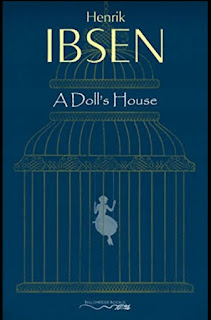
A Doll's House : play by Norway's Henrik Ibsen

 A Doll's House : play by Norway's Henrik Ibsen.


 Hello, Readers!!


This is my blog work. Plz have a look at it .


So, here I will reflect my views upon "A Doll's House "play .This is my Bachelor's Text.


A Doll's House  is a three-act play written by Norway's Henrik Ibsen. It premiered at the Royal Theatre in Copenhagen, Denmark, on 21 December 1879, having been published earlier that month. The play is set in a Norwegian town circa 1879. Problem plays were developed during the realism literary movement of  the 19th century.


Problem Plays especially presented social issues or social problems in a realistic way. The social problem that Ibsen presents in a doll's house is the treatment of women, particularly the entrapment of women. The problem he focuses on is especially portrayed through Nora. Norah appears to be happy in her marriage in fact at the beginning of the play she even thinks she is happy. However earlier in her marriage Nora was faced with the problem of needing extra money to save her husband's life. Her husband expressly forbade taking out loans and in her society  it was illegal for women to take out a loan without the signature of a man. At the same moment her husband was ill her father was on his deathbed. Therefore out of desperate need Nora was forced to be a bit cunning and forge her father's signature on a loan. We learn as the play unfolds that in early years Nora secretly  struggled, fretted, and worked very hard to try and produce money to pay for the debt. However Nora now has a new anxiety she is being blackmailed by Krogstad, her creditor which is the threat of exposing her fraud should not convince her husband to allow  Krogstad to keep his post at the bank. Nora's personal problems portray the larger  social problems presented in the Play such as the unfair treatment of women. The unfair treatment of women is first presented presented in the fact that society forbade women to take out a loan  because society saw women as uneducated, irresponsible, ridiculous individuals.Had Nora not been forbidden by society to take out a loan on her own, she would have never been placed in a position in which she needed to commit fraud. The unfair treatment of women is also portrayed in Nora's struggles to earn money to pay back the loan. Back then, middle class women like Nora were forbidden to work. Lower class women however were allowed to work only low income jobs, such as Clerks, teachers and domestic servants. Despite the fact that Nora was middle class she did however manage to find work to earn money that she could perform behind Torvald's back.The  Main subject or  issue on which a drama a doll's house is written is the issue of women. More  specifically its subject is women's status in the society and their treatment by men, the lack of true love and respect for wife by husbands and the lack of justice and dignity in the treatment of women in the society itself.


Thank you…. 

Blog on 'Rosencrantz and Guildenstern are dead'

 Hello , Everyone, welcome to my blog!!


• " Rosencrantz and Guildenstern are dead"  written by.   TOM STOPPARD


• This blog  is a part of my academic work. Here I like to write about one Absurd play  named " Rosencrantz and Guildenstern are dead " written by Tom Stoppard.I like this play most because of many reasons. First it is an absurd play. If we heard the title then it shows that there is nothing in it. But it is an interesting play to study. We can learn about the unique character study of Rosencrantz and Guildenstern.Both have their own dynamic perceptions according to their role in play. We seem like they have no sense and only entertain us.


Rosencrantz and Guildenstern Are Dead (1966) imagines Shakespeare's Hamlet from the perspective of two minor courtiers. In Stoppard's revision, the characters, Rosencrantz and Guildenstern, who are not fully developed in the original play, fumble around bewildered about their mission and the reason for their existence.The central issue that Stoppard focuses on is Rosencrantz and Guildenstern's state of existential crisis. The two characters engage in repetitive, often nonsensical dialogue as they fumble through a plot that is incomprehensible to them. Samuel Beckett's Waiting for Godot is often cited as a source from which Stoppard draws much philosophical influence. Both plays focus on the absurdity of the human condition as two protagonists find themselves passing time, talking, or playing games until the "action" resumes. However, Stoppard invokes fast-paced comedy and theatricality that cut through Beckett's grave atmosphere. If we want to know or study the "Rosencrantz and Guildenstern are dead" then first we must know the " Hamlet" written by Shakespeare.So,in Hamlet Shakespeare more focus on Hamlet the protagonist character, he don't give more importance to Rosencrantz and Guildenstern.


•While if we see them these two characters had their important significant place in play. If these two characters are not there then maybe Hamlet doesn't come from England where he is sent for his death. If they are not dead then what about Hamlet's revenge? He can't come back to take his father's revenge. Without this character the main ending of the novel maybe will not happen.In Tom Stoppard's play we find that this both characters are on way and path, the thing which shows absurdity that Where ,why and How they are going? What is the aim of their journey? To whom they are going. They even don't remember their names. They replace their name with each other. They are playing with their toes and doing nonsense things. The play is divided into 3 acts. The play opens as Rosencrantz and Guildenstern are spinning coins in an indistinct landscape. As the coin is called "heads'' or "tails," the winner places the coin in his sack. The coin has landed on heads over seventy-six times in a row, and Rosencrantz has won every time. Guildenstern, the more philosophical and probing of the two, is not angry at his loss, but is rather trying to hide his discomfort at the improbability of the situation. They forgot that they were called by King Claudius as they are the childhood friends of Hamlet. After the death of King Hamlet, young Hamlet seems to be different,behaving as if he was mad. King Claudius through Rosencrantz and Guildenstern he want to clarify that what exactly happened with Hamlet.Here they both supposed to act on Murder of Gonzalo kind of act. At the end when they are on the boat,they forget why they are on the boat and come to know that they have to deliver Hamlet to England. Here they read a letter about Hamlet's death. In reality they both are killed. So, here Tom Stoppard gives more significance and importance to these both characters. In Hamlet they are like Marginalized characters. Here the writer raises their voice and gives sympathy. So, here we can see the significance of Rosencrantz and Guildenstern. There are many interesting sequences in play which are both worth reading and understanding.


Thank you….


Friday, February 25, 2022

Thinking Activity : The Joys of Motherhood

 Thinking Activity : The Joys of Motherhood


Hello,


I am Bhumika Mahida, here I'm going to write this blog on " The Joys of Motherhood" , the task which is assigned by Ms Yesha Bhatt . So , let's begin…


About Author : 


Buchi Emecheta


Buchi Emecheta is a Nigerian novelist. Her themes of child slavery, motherhood, female independence, and freedom through education have won her considerable critical acclaim and honors, including an Order of the British Empire in 2005. 


Buchi Emecheta was born on July 21st, 1944 in Lagos Nigeria. Her father, who was a railway worker, died when Emicheta was eight. Her mother also died, later on, leaving Emecheta an orphan. She lived with different family members while attending Methodist Girls High School on a scholarship that she won. Emecheta was known to be very intelligent, and her desire to obtain an education was always noticeable. Despite her challenging childhood she continued to work hard in school to pursue her dreams. At the age of sixteen, she married Sylvester Onwardi who she was betrothed to at age eleven. One of her dreams was to move to England, and after a bit of convincing, they journeyed to England with their two children in the year 1962. Emecheta’s living condition in England was entirely different than she was used to in Nigeria. At twenty-two, Emecheta was a mother of five living in a strange land and being abused by her husband. She worked as a librarian and attended London University in 1970 where she studied and earned her degree in Sociology in four years. Soon after she started to work as a social worker. Emecheta found her job to be very rewarding. She loved writing and decided to write her first novel. Filled with pride and excitement, she shared the moment with her husband. Filled with jealousy and rage, her husband destroyed her manuscript. Emecheta reported feeling as if she had lost a child, this malicious act was enough to ask for a divorce from her abusive husband.


Emecheta’s first book in The Ditch (1972) focused on the single immigrant mothers in the UK and also did her second novel Second Class Citizen (1974). Her love for writing produced more than 20 novels which are also based on her past experiences, sexual politics, and racial prejudice. Emecheta’s work continued with The Bride Price (1976), The Slave Girl (1977), The Joys of Motherhood (1979), Nowhere to Play (1980), The Moonlight Bride (1980), The Wrestling Match (1980), Our Own Freedom (1981), Double Yoke (1982), Naira Power (1982), Destination Biafra (1982), The Rape of Shavi (1983), Adah’s Story (1983), Head Above Water (1986), A Kind of Marriage (1986), Family Bargain (1987), Gwendolen (1989) The Family (1989), Kehinde (1994) and The New Tribe (2000).


The Joys of Motherhood


The Joys of Motherhood is a novel written by Buchi Emecheta. It was first published in London, UK, by Allison & Busby in 1979 and was reprinted in Heinemann's African Writers Series in 2008. The basis of the novel is the "necessity for a woman to be fertile, and above all to give birth to sons' '. It tells the tragic story of Nnu-Ego, the daughter of Nwokocha Agbadi and Ona, who had a bad fate with childbearing. This novel explores the life of a Nigerian woman, Nnu Ego. Nnu's life centers on her children and through them, she gains the respect of her community. Traditional tribal values and customs begin to shift with increasing colonial presence and influence, pushing Ego to challenge accepted notions of "mother", "wife", and "woman". Through Nnu Ego's journey, Emecheta forces her readers to consider the dilemmas associated with adopting new ideas and practices against the inclination to cleave to tradition. In this novel, Emecheta reveals and celebrates the pleasures derived from fulfilling responsibilities related to family matters in childbearing, mothering, and nurturing activities among women. However, the author additionally highlights how the 'joys of motherhood' also include anxiety, obligation, and pain.


Motherhood – game of power and control


The Joy of Motherhood by Buchi Emecheta is one of the most sophisticated Bildungsroman books produced in colonial Nigeria between the early and mid-twentieth centuries, describing the protagonist's twenty-five-year journey. The protagonist, Nnu Ego, has progressed from a powerful tradition-bound character to a feminist, as the author has highlighted. Her efforts to prove the validity of motherhood are thwarted at every point, regrettably, by a tangle of inconsistencies that she finds herself unable of resolving.


The novel is devoted to all mothers, beginning with "The Mother" in the first chapter and ending with "The Canonized Mother" in the last chapter. It provides a caustic examination of patriarchal, colonial restraints encountered by women like Nnu Ego, whose societal worth is predicated on two factors: first, her ability to produce children, and second, her readiness to meet male-oriented Ibo culture's demand and serviceability. As a passionate author in finding the difficulties encountered by Nigerian women, she stated in a talk  with Adeola James that  


“in Joys of Motherhood…I created a woman who had eight children and died by the wayside”( Adeola )


Traditions played an important part in the development of the concept of motherhood. They assumed that motherhood would deliver a fulfilled and distinguished life to the protagonist. Emecheta uses the technique of mother's introspection in which the protagonist realizes that she has not brought fulfillment to the family. Nnu Ego, who is a doubly colonized mother, describes her sorrows and sacrifices in a statement released shortly after the birth of her twin daughters. She had one of these epiphanic moments when stuck in the web of delivery and a difficult position. The following remark expresses the psychological temperament and sadness of a mother, and it represents the Nigerian women's response to the prevalent problem.


Nnu Ego feels empty without motherhood and has fought hard to be a mother. Emecheta wishes to convey the message that having more than five or six children does not guarantee that a mother would be rich in her later years. She looks at the institution of motherhood, the horrible experiences that come with it, and the impact it has on the brains of Nigerian women.


The author has given the novel's final chapter the satirical title of "The Canonized Mother." Throughout her life, Nnu Ego was subjected to patriarchal enslavement and died alone. In the patriarchal and traditionally strong Ibo society, all three moms, Ona, Akadu, and Nnu Ego, have been mistreated. However, Emecheta's Nnu Ego defies the conventional wisdom that having a large family will provide a woman with a lot of ecstasies.


Thank you…


Words

1,092

Characters

6,764

Thinking Activity : A Dance Of the Forests

 Thinking Activity : Unit-3 A Dance of the Forest


Hello, 

I am Bhumika Mahida , here I'm going to write a blog on the task of " Dance of The Forest' which is assigned by Ms. Yesha Bhatt , So let's begin…


About Author:


Wole Soyinka 


Nigerian playwright and political activist Wole Soyinka received the Nobel Prize for Literature in 1986. He was born in 1934 in Abeokuta, near Ibadan, into a Yoruba family and studied at University College in Ibadan, Nigeria, and the University of Leeds, England. Soyinka, who writes in English, is the author of five memoirs, including Aké: the Years of Childhood (1981) and You Must Set Forth at Dawn: A Memoir (2006), the novels The Interpreters (1965) and Season of Anomy (1973), and 19 plays shaped by a diverse range of influences, including avant-garde traditions, politics, and African myth.click here to know more about Soyinka.


A Dance of the Forests


A Dance of the Forests is one of the most recognized of Wole Soyinka's plays. The play "was presented at the Nigerian Independence celebrations in 1960, it ... denigrated the glorious African past and warned Nigerians and all Africans that their energies henceforth should be spent trying to avoid repeating the mistakes that have already been made." At the time of its release, it was an iconoclastic work that angered many of the elite in Soyinka's native Nigeria. Politicians were particularly incensed at his prescient portrayal of post-colonial Nigerian politics as aimless and corrupt. Despite the deluge of criticism, the play remains an influential work. In it, Soyinka espouses a unique vision for a new Africa, one that is able to forge a new identity free from the influence of European imperialism.


A Dance of the Forests is regarded as Soyinka's theatrical debut and has been considered the most complex and difficult to understand of his plays. In it, Soyinka unveils the rotten aspects of society and demonstrates that the past is no better than the present when it comes to the seamy side of life. He lays bare the fabric of Nigerian society and warns people as they are on the brink of a new stage in their history: independence.


Major Themes Of A Dance of the Forests


Corrupted power


Corrupted power is another major theme in the play, particularly as it represented in the characters of Mata Kharibu and Madame Tortoise. As we are taken back to the palace of the king, we see that Madame Tortoise exploits her beauty and her power over men in order to stir up discord. Mata Kharibu is also corrupted by his immense power, as demonstrated by the fact that he is demanding that his soldiers fight against their better judgment, and the fact that he mercilessly punishes free thinking. Wole Soyinka tells a story that reveals to the reader that all power is corruptible, and that just because people are given authority does not mean that they are good or ethical people.


Nature 


The play takes place in a forest, and throughout, various elements of the natural world come to life to take part in the reckoning that is taking place with the mortals. The Forest Head is a spirit who presides over the forest, and during the welcoming of the Dead Man and Dead Woman, various spirits of different natural elements are called upon to speak their piece. These include Spirit of the Rivers, Spirit of the Palms, Spirits of the Volcanos, and others. All of these elements of nature are personified through verse, showing us the connection between the human and the natural world.


Birth


One of the unresolved features of the Dead Woman is the fact that she was killed while pregnant with a child. She returns to the world of the living still with a pregnant belly, and during the welcome ritual, the fetus appears as a Half-Child, who is caught between being influenced by the spirit world and remaining with his mother. The Half-Child is a tragic figure, as he was never given the relief of life, and when he is given a chance to speak he says, "I who yet await a mother/Feel this dread/Feel this dread,/I who flee from womb/To branded womb cry it now/I'll be born dead/I'll be born dead." The figure of the child is a tragic one, standing in as the ultimate symbol for the wrongs done to the Dead Man and Dead Woman, and the unresolvedness of their plight.


Atonement


The play's central theme is atonement. The Dead Man and Dead Woman are brought back to life in order for the four mortals who mistreated them in the past to realise and atone for their wrongdoings. While the mortals are clueless for much of the play, they finally learn that the Dead Man and Dead Woman's visitation is to teach them a lesson, and by the end, they have experienced a form of conversion, realising that they had sinned before.


The Past 


The play does not follow an exactly linear structure, in spite of the fact that it all takes place in the course of a day. As we learn rather quickly, the narrative concerns the sins of the past, and each mortal character has multiple identities, representing both who they are in the present as well as who they once were in the past. The present is layered onto the past as if to suggest that nothing from our history is ever fully gone, that we descend from patterns and events that precede us and continue to affect us in the present. The plot of the play concerns the ways that human beings must overcome their pasts and learn from them.


Ritual


Another major theme, as well as a formal element of the play, is ritual and tradition. Throughout, we see the characters going through traditional motions in order to understand more about their circumstances. These rituals include the ceremony for the self-discovery of the mortals, in which the mortals must relive their crimes, the Dead Man and Dead Woman must be questioned, and the mortals reveal their secret wrongs.


Wounds Trauma 


People sometimes suffer from their traumatic pasts. As all characters who are roaming in the forest have their traumatic experiences. Obaneji knows all these things and he wants that they all can accept their deeds and atonement for it. In the forest Obaneji also asks all about their past and what they have done. Demoke told his story and Rola and Obaneji helped him to move on. The other example is of the dead man & woman who had a terrible end of their life. Their wounds were not filled but they faced a lot of trouble and trauma because they opposed the king.  


Thank you…


Words 

1,126

Characters

3,686


Friday, February 11, 2022

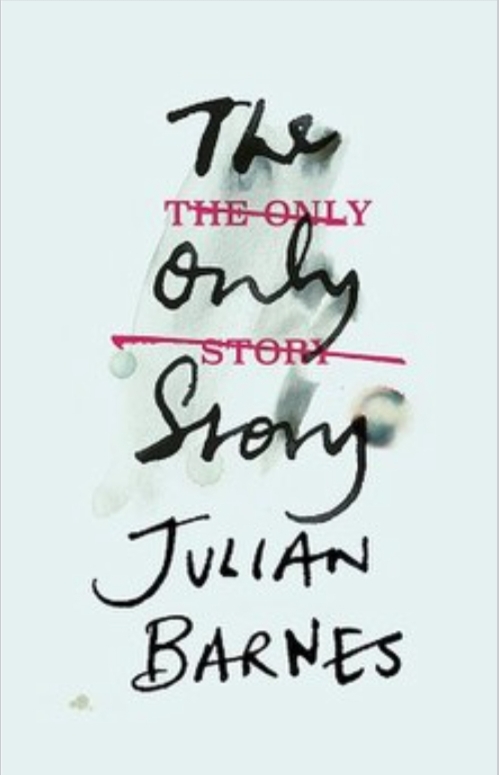
Thinking Activity : The Only Story

Thinking Activity : The Only Story 


Hello , 


I am Bhumika Mahida , here I'm going to write a blog on the novel ' The Only Story ' . In this blog I have to give the answers of some questions and points as a task from the blog 👉 The Only Story Which is assigned by Dr. Dilip Barad sir from Department of English M K Bhavnagar University. So let's begin with the introduction of the author of the Novel. 


Introduction : 


Julian Barnes


Julian Barnes, in full Julian Patrick Barnes, pseudonyms Edward Pygge and Dan Kavanagh, (born January 19, 1946, Leicester, England), British critic and author of inventive and intellectual novels about obsessed characters curious about the past.  click here ( to read more about the author) . 


The Only Story


For this novel we don't fine any readymade matirial to understand the very sense of the novel and there are such a reviews by some authors or readers make it clear that it is worth reading or not .

Here is one review by a reviewer. 


This is Julian Barnes's latest offering, an author I absolutely adore. It is a profound and moving love story, and the complexities, intense suffering and heartbreak that accompanies it. It has Paul looking back on his only story, the love of his life, and his shifting perspectives as time passes. Barnes can be relied on for his well crafted beautiful prose and imagery, underscored by a musicality that beguiles and delights. The novel is split into three parts, and relates the story of 19 year old Paul, a Sussex University student who in 1963 meets and falls in love with 48 year old married Susan, who has children older than him and carries heavy emotional baggage from her personal history. What follows in a detailed examination of the repercussions on the people in their lives of their love affair amidst the middle class suburban attitudes, social norms and expectations of the period that the lovers are subject to.


Barnes uses the classic device of moving from first person narrative, to the second person and finally the third person to highlight the increasing distance that Paul injects into his love story, moving from the intense passion at the beginning to a more dispassionate approach. He is aware that his memories are unreliable and his thinking tainted by self delusion. What Barnes gives is his insights into the human condition, a subtle reflection and observations on the nature of love and the trajectory it follows for Paul, infused with an air of melancholia set in a specific time and place. Whilst there are echoes of Barnes previous novels, I found this a brilliant and thought provoking read that I recommend highly. Many thanks to Random House Vintage for an ARC.


( It from one of the reviews on The Only Story )

  Review by      -Paromojit


1.Memory Novel - Structurally as well as Thematically

'The Only Story' is a memory novel. Because it is based on the memory of Paul Roberts. Paul as a narrator told his story but even he is not sure about his story.  We know the whole story of this novel which is based on the memory of Paul Roberts. 


In the novel we can find four aspects for the theme of memory : 


  • History is collective memory; memory is personal history 


  • Trauma in memory


  • Memory and morality


  • Memory prioritizes


We know the whole story of the novel by the memory of Paul. Sometimes it will be hard to remember all the things . So it is called the Trauma of Memory . When we read any historical concept it will be a  collective memory of events, and memory is personal history. The whole story is based on Paul's Memory of his love story So ' Memory' will be the major theme for this novel. 


2.Postmodern Novel - theme of existentialism


The Only Story is a postmodern novel. It thinks about the situation that is happening now and may happen in future also. 

In the novel we can find some objects which reflect the existential aspects . 


Most of us have only one story to tell. I don’t mean that only one thing happens to us in our lives: there are countless events, which we turn into countless  stories. But there’s only one that matters, only one finally worth telling, this is mine (Barnes,2018, p. 13). 


So proves that Paul considered himself as a truth - teller. Barnes' novels are devoid of any forced optimism. The properties of postmodern words may be justified by novels that reflect reality or fiction. In today's postmodern era fiction, true 'reality' is not portrayed. This is like a statement of fact, similar to how a crystal reflects our image's truth. In several of Barnes's stories, the primary characters reflect genuine images as a fictitious image rather than revealing their true attributes. As a result, several of Barnes's characters affect the image and thinking of Barnes.


Love is the emotional structure of one's society, and it is formed on sex indirectly. Love produces the polished form of culture and sex. Love, like sex, is riddled with ambiguity, existing in both natural and non-natural forms, implying that it exists beyond the abstract level and is difficult to explain. Love is an inexorable source of anxiety, though possibly a deeper dread for being soaked through, the fear of failing. The concept of eternal love is buried within the body, rather than being external as an ironic word suggests. Researchers and philosophers have observed that the postmodern sensual movement is dismantling the links that bind eroticism to sex on one hand and love on the other. Love selection is also founded on sex determination, which is the process of assigning healthy individuals to attributes such as selectiveness and faithfulness. If this planning is done free, the cross-cultural world will shift dramatically. The pleasures of sex with sensual meaning are encouraged in postmodern culture.


Barnes' novels are anchored by love and human imagination, and this in itself puts him on the margins of postmodernism. 


3. Theme of Love ( Passion + Suffering) 


In the Only Story the passion turned into suffering.The story of the youth of 19 years Paul's passionate attraction towards Susan MacLeod, 48 years old married woman with two daughters.This is nothing but a story of passion turning into suffering. 


Paul is giving his own defence that it was his  mistake to fall in love with a middle aged woman.But can we think of all these things when we are in love?well we can't because if we think then we are not in love.That is how he was carried towards suffering, drifting like a wooden log. 


"Remember, as you read this small book, generally and specifically about love, remember that suffering is, after all, the Latin root for passion": Ellen Prentiss Campbell on Julian Barnes's new novel. 


This is his story of a life-changing, life-defining passionate love affair, from innocence to experience, from youth to age, from infatuation to weariness. It is the story of suffering for both Paul as well as Susan, along with all other family members. 


Would you rather love the more, and suffer the more; or love the less, and suffer the less? That is, I think, finally, the only real question. You may point out correctly that it isn't a real question. Because we don't have a choice. If we had the choice, then there would be a question. But we don't, so there isn't. Who can control how much they love? If you can control it, then it isn't love. I don't know what you call it, but it isn't love. 


He remembered, at school, being guided by masters through books and plays in which there was often a Conflict between Love and Duty. In those old stories, innocent but passionate love would run up against the duty owed to family, church, king, state. Some protagonists won, some lost, some did both at the same time; usually, tragedy ensued. No doubt in religious, patriarchal, hierarchical societies, such conflicts continued and still gave themes to writers. But in the Village? No church-going for his family. Not much of a hierarchical social structure, unless you counted the tennis and golf club committees, with their power to expel. Not much patriarchy, either not with his mother around. As for family duty: he had felt no obligation to placate his parents. Indeed, nowadays the onus had shifted, and it was the parents' job to accept whatever 'life choices' their child might make. Like running off to a Greek island with Pedro the hairdresser, or bringing home that gymslip-mother-to-be. Yet this liberation from the old dogmas brought its own complexities. The sense of obligation became internalised. Love was a Duty in and of itself. You had a Duty to Love, the more so now that it was your central belief system. And Love brought many Duties with it. So, even when apparently weightless, Love could weigh heavily, and bind heavily, and its Duties could cause disasters as great as in the old days. 


4.Critique of Crosswords :


In this Novel two people are playing crosswords, one is mr. Gordon Macleaod and another is Joan.In ‘The Only Story’ Julian Barnes has captures the nuances of social life lived in the 20th century England. The crosswords was something so significant aspect of this traditional British activity that several characters of this novel are found meaningfully engaged with it. 


It is said that Crossword puzzles have several benefits like:


  • They can strengthen social bonds. Completing a crossword puzzle on your own is impressive, but you should never feel bad if you need to ask for help. …

  • They improve your vocabulary. ...

  • They increase your knowledge base. ...

  • They can relieve stress. ...

  • They boost your mood. 


Apart from Joan, it is Gordon Macleod who is found doing crosswords in the novel. On two occasions, he is found solving the crosswords with Paul Roberts. The answers to the puzzle are ‘Taunton’ – a name of a town – meaning continue mocking at – and - ‘TREFOIL,   REF – arbiter – in the middle of TOIL – work.’ If we read these words in context of the relations between Paul and Gordon we may find it symbolically significant. Taunton – making mockery of something/somebody and Trefoil – a popular warning symbol signifies triangular relation among Paul – Susan – Gordon. Both these words in the crossword puzzle seem to signify a taunt on Paul’s middling in between Susan and Gondon’s not-so-happy married life.  


Like crossword , we can say that today's crossword is  'WORDLE' , lots of people play this game and also it's a very interesting game.


Here is the link 

https://www.wordleunlimited.com/?wardle=aXNsYW5k

Of the game 'WORDLE'.


5.Paul - the unreliable narrator


Paul is the unreliable narrator of this novel.Beacuse whatever he is telling to readers is based on his personal memory.hHe says that he never kept a diary.So how can we rely on one's own memory.It is very problematic.Paul is not sure about his life experiences. He himself is counter arguing the things in this novel.


6.Susan - madwoman in the attic 


Click here 👉 to read the full story of 'Mad Women in the Attic' . The title of the book is derived from Jane Eyre‘s Bertha Mason, who is locked away by her husband Mr Rochester in the attic of Thornfield Hall. She is an ominous character, full of uncontrollable passion, violence, sensuality, and madness, almost bestial in her behaviour.


Here the character of Susan is comparable with that character of Bertha from ' Madwoman in the Attic'. Bertha was suffered by her husband and here Susan is suffering from some kind of this thing. She becomes an alcoholic. She speaks lies to Paul. Somewhere she is stuck with responsibility. She was beaten by her own husband. She had extramarital affair with Paul, she somewhere wants love, some kind of warmness but she was constantly become a victim of hatred, sexual pleasure and was beaten so many times.  Susan also become a victim of child abuse when she went to his uncle Hemph’s house. When finally she went with Paul there she felt lonely and that time she became alcoholic like anything. In the end, Paul also abandons her and her daughter Clara takes care of her.  Susan’s character is fascinating because there is another character who counterpointed Susan's character.  


7.Joan - one who understood existential enigma 


Joan is sister of Gerald.After death of Gerald Joan suffered a lot because in her family Gerald was very near to Joan that also has does kind of damage to Joan.Joan can save herself from the damage.We may question that was it there nothing wrong happened with Joan as Susan is suffering from her life.Joan was living with yeppers/dog first and the she has another dog called Sibyl.Sybil is a mythical character (an old lady in a prison or jar).


Joan is the tennis player and partner with Paul.Joan has many affairs with the rich man.When Gerald was died Joan was devastated towards life.And when one devastated from life they don't go for human beings but rather find the pet animals.Joann Was doing the same in this novel.Sibyl as her ultimate company. 


8.Whom do you think is responsible for the tragedy in the story? Explain with reasons.


From my viewpoint this tragedy happened because of Susan , because Susan is the the character who creates her own problems and she is the responsible for her condition . When the love story begins at that time Paul is 19 years old while Susan is 48 years old. If she has chosen a right path for her then the tragedy might not happen. So , Susan is responsible for the tragedy in the novel.


Thank you…


Words

2,298

Characters

10,990


Types of research : Research Methodology

  Types of Research : Hello ,  I'm Bhumika Mahida , here I'm going to write a blog on the topic " Types of Research", whic...