Sunday, August 1, 2021

Thinking Activity : Midnight's Children Film Adaptation

 Thinking activity Midnight's Children Film Adaptation:


Hello friends,


Here I'm gonna write this blog on the Film adaptation of Salman Rushdie's Midnight's Children , so let's start…


Introduction:


Salman Rushdie


Sir Ahmed Salman Rushdie FRSL  is an Indian-born British-American novelist and essayist.His work, combining magical realism with historical fiction, is primarily concerned with the many connections, disruptions, and migrations between Eastern and Western civilizations, with much of his fiction being set on the Indian subcontinent.more 


Points to ponder :


  1. Narrative technique ( changes made in film adaptation - for eg. absence of Padma, the Nati , the listener, the commenter - What is your interpretation ? )


 Rushdie employees  the  technique  of  the  first  personnarrative  in Midnight's  Children.  The  characters  are introduced  long  before  they  actually  appear  in  the novel.  It  creates  suspense  in  the  mind  of  the  readers 


In the opening scenes we can observe differences in the way the versions address the 

audience: the novel’s narrator uses the first person to provide, in a deferred and rounda-

bout way, his story; in the film, there is also direct speech, but the narrative proceeds 

much more unswervingly. The other two versions do not construct a rapport with the 

audience in such a straightforward way by direct address.there is absence of the character of Padma who is the listener of the story in the film The novel and the film thus seem to initially create a more personal rapport with their 

constructed audiences. It is significant in this respect that the character of Padma, the 

novel’s original immediate addressee and audience the person who listens to and com

ments on Saleem’s narrative, and the second main character in the novel, after the pro

tagonist is included in the first two adaptations, but in the film she is supplanted by 

Rushdie’s voiceover. Padma’s role in the film was originally offered to the actor Nandita 

Das, who had worked with Mehta in Fire and Earth, but Das abandoned the project for personal reasons (Garfinkel, 2009; IBNLive, 2011). Rather than looking for a substitute 

for the role of Padma, this setback was compensated by introducing the voiceover. The 

choice has been regarded variously as a success and a failure by critics, for example, 

from the gender perspective. There are indeed grounds for interpreting the substitution of 

a female voice with a male as problematic; this change may even be attributed to the 

authorial ego. However that may be, it creates a fundamental difference between the 

versions.

With respect to the impact on reception of having the author in Padma’s role, the use 

of Rushdie’s voice for the narration has received mixed reviews. 


  1. Characters ( How many included , how many left out - why ? What is your interpretation ? )


The characters of the film Midnight's Children and the novel Midnight's Children are some way different , became in the film some minor characters were absent .


According to the Novel Midnight's Children , there is in the novel characters are...


  • Aadam Aziz is a doctor and the father of Amina Sinai, or Mumtaz, Saleem's mother.

  • Aadam Aziz's Mother runs the jewel business of her husband. She is often shrewd toward Aadam. 

  • Aadam Aziz's Father is a formerly successful jewel merchant, whose mentality has now declined.

  • Tai is a boatman on Dal Lake and a friend of Aadam Aziz.

  • Naseem Ghani is the daughter of the wealthy landlord Ghani. She is first Aadam Aziz's patient and then becomes his wife. 

  • Ghani the landowner is Naseem's father. He owns a lot of property around Dal Lake in Kashmir.

  • Oskar Lubin is a German anarchist friend of Doctor Aziz from his student days in Heidelberg, Germany.

  • Ilse Lubin is Oskar's wife and another anarchist friend of Aadam Aziz from his student days in Heidelberg. 

  • Ingrid another anarchist friend in Heidelberg.

  • Brigadier R. E. Dyer, an officer in the British army and Martial Law Commander of Amritsar who orders his men to fire on an unarmed crowd. An actual historical event and personage, see Reginald Dyer.

  • Alia is the eldest daughter of Aadam and Naseem Aziz; she is the sister of Amina Sinai (Mumtaz) and Emerald.

  • Amina Sinai (a.k.a. Mumtaz) is the middle daughter of Aadam and Naseem Aziz. 

  • Mian Abdullah (Also known as the Hummingbird) is a pro-Indian Muslim political figure, who dies at the hands of assassins.

  • The Rani of Cooch Naheen a wealthy Muslim woman who sponsors the political campaign of the Hummingbird.

  • Nadir Khan is Mumtaz's first husband. He is "the Hummingbird's" personal secretary, and is known for his rhymeless poetry. 

  • Hammdard the rickshawman is a rickshaw servant who lives behind Aadam and Naseem's house.

  • Rashid the rickshaw boy is the son of Hammdard. He lives behind Aadam and Naseem's house.

  • Emerald the youngest and prettiest daughter of Aadam and Naseem Aziz; she is Saleem's aunt, the sister of Mumtaz. She marries General Zulfikar.

  • General Zulfikar is the husband of Emerald, who is involved with Pakistani political events. Is described as having a face like Pulcinella.

  • Ahmed Sinai is Saleem's father and Amina's husband. He is originally a dealer in leathercloth, but becomes a property speculator when he moves to Bombay.

  • Lifafa Das is a peep show street man who leads Amina to Shri Ramram Seth in gratitude after she saves his life from a Muslim mob.

  • Shri Ramram Seth is a Hindu seer, a cousin of Lifafa Das. 

  • William Methwold is an Englishman from whom the Sinais buy their house in Breach Candy, Bombay.

  • Wee Willie Winkie is an accordionist and entertainer. He is Shiva's non biological father, and Vanita's husband.

  • Vanita is the wife of Wee Willie Winkie; she is revealed to be Saleem's biological mother, who dies during labor.

  • Mary Pereira is a midwife and servant, who switches Shiva and Saleem at birth in an attempt at impressing her sweetheart Joseph D'Costa.

  • Joseph D'Costa is Mary Pereira's sweetheart, a hospital porter, a communist political radical and a most wanted man by the Indian police.

  • Suresh

 Narlikar is a child hating gynecologist and businessman, who lives on Methwold's Estate in Bombay.

  • Doctor Bose is the doctor who delivers Saleem. 

  • Ibrahim Ibrahim a next door neighbor in Sans Souci villa on Methwold's Estate in Bombay. 

  • Ismail Ibrahim' a neighbour to the Sinai's who is a crooked lawyer. 

  • Nussie Ibrahim, Ismail's wife, who is nicknamed The Duck because of the way she walks. 

  • Ishaq Ibrahim, a hotel owner lives with his father and brother on the Methwold's Estate.

  • Adi Dubash A nuclear physicist who works on India's nuclear program.

  • Mrs Dubash, his wife who is a religious fanatic. 

  • Cyrus the Great the Dubashes only son and childhood friend of Saleem's.

  • Sonny Ibrahim is Saleem's neighbour and friend.

  • Eyeslice Sabarmati one of Saleem's childhood friends on Methwold's Estate, the son of Commander Sabarmati and his wife Lila, and the brother of Hairoil.

  • Shiva is a boy who is born at the same moment as Saleem. 


Thus, according to this character list of the novel Midnight's Children we find in the film Midnight's Children ,  there is lot many absence of the minor characters , but in this absence of the minor characters my interpretation is that for me it is good to watch the film instead of reading whole novel , because the film contains entire idea of the novel through some main Characters.


  1. Themes and Symbols ( If film adaptation able to capture themes and symbols) 


In this concept of Themes and Symbols I want to say , yes . For the film Midnight's Children's use of symbols and themes. 



Truth and Storytelling:


Self-proclaimed writer and pickle-factory manager Saleem Sinai is dying—cracking and crumbling under the stress of a mysterious illness—but before he does, he is determined to tell his story. With the “grand hope of the pickling of time,” Saleem feverishly pens his autobiography, preserving his stories like jars of chutney, searching for truth and meaning within them.


British Colonialism and Postcolonialism:


Born at exactly midnight on the eve of India’s independence from British colonialism, Saleem Sinai is the first free native citizen born on Indian soil in nearly a hundred years. 

After a century of British rule, in addition to a century of unofficial imperialism before that, Saleem’s birth marks the end of a two-hundred-year British presence in India.


Sex and Gender:


Salman Rushdie’s Midnight’s Children is a harsh critique of the gender-related power struggles of postcolonial Indian society. After generations of purdah—the belief that Muslim and Hindu women should live separately from society,
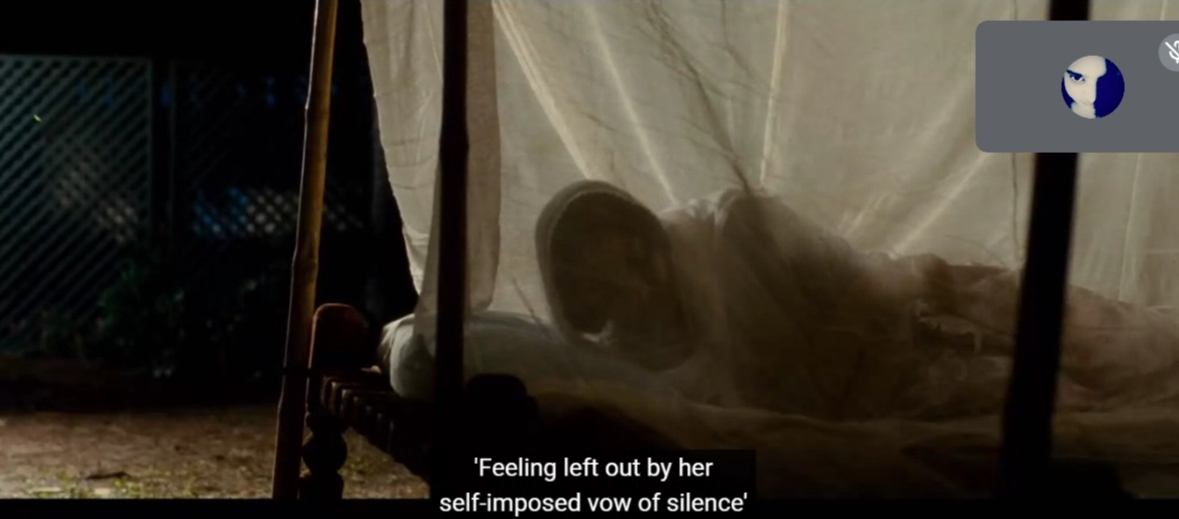


behind a curtain or veil, to stay out of the sight of men—postcolonial women are encouraged to become “modern Indian women” and remove their veils.


Identity and Nationality:

From the moment Saleem Sinai is born on the eve of India’s independence from Great Britain, he becomes the living embodiment of his country.
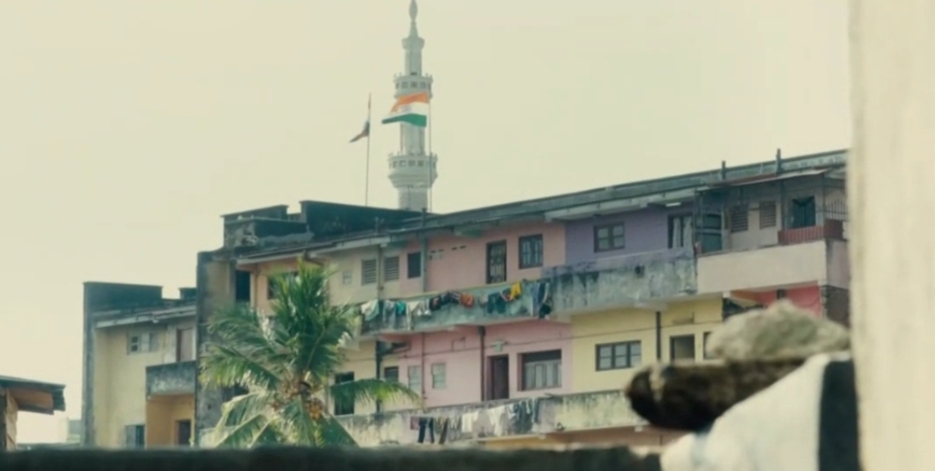
Saleem is India, and his identity metaphorically represents the identity of an entire nation; however, Saleem’s identity is complicated and conflicted. A nation, generally understood as the same people living in the same place, only loosely applies to India’s diverse population. 


Fragments and Partitioning:

Following their 1947 independence from British rule, India begins to break up in a process known as partitioning. British India splits along religious lines, forming the Muslim nation of Pakistan and the secular, but mostly Hindu, 
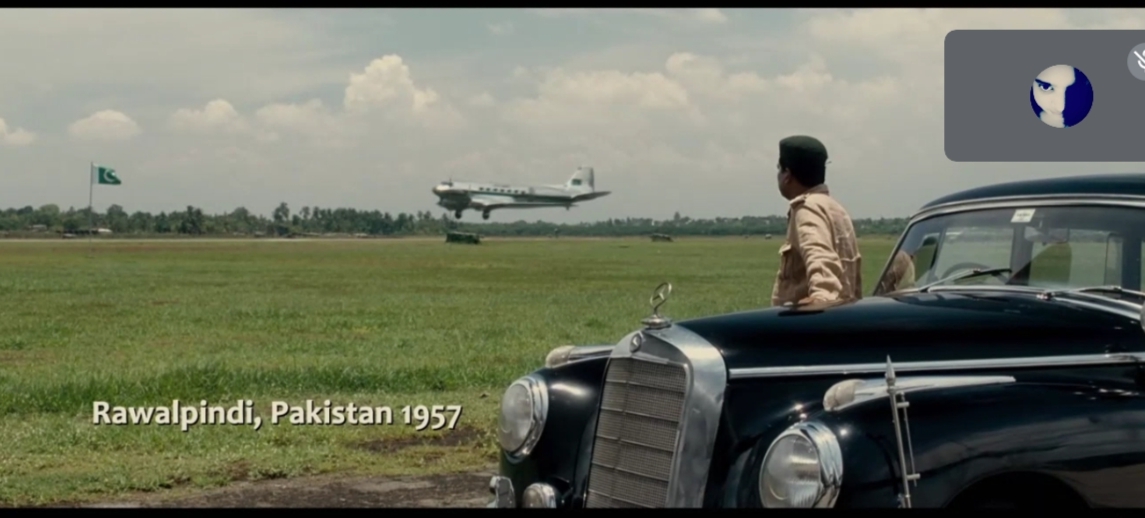
nation of India. India continues to fracture even further, dividing itself based on language and class. Meanwhile, Saleem Sinai, the living embodiment of India, 


Religion:

Religion is at the forefront of Salman Rushdie’s Midnight’s Children, and it drives most of the narrative throughout the entire novel. 

Saleem Sinai, the narrator-protagonist, is born Muslim but lives most of his life in the Hindu-steeped culture of Bombay.
His lifelong ayah, Mary Pereira, is a devout Catholic, and his sister, the Brass Monkey, ultimately joins a nunnery.
it is a major cause of the civil unrest following India’s independence. Suppressed under British rule, freedom of religion is a fundamental right under India’s new constitution, and it has saturated society.


  1. The texture of the novel ( What is the texture of the novel?) Well , it is the interconnectedness of narrative technique with the theme is it well captured ?)


Midnight’s Children moves at more grandiose levels. The grand destiny of the great Nation is 

reflected in that of Midnight children, the children born at the midnight hour of August 15th, 

1947. The chief protagonist Saleem Sinai finds himself “mysteriously handcuffed to history”. The texture of this novel is allusive, complex and inclusive dense with 

symbolic, even emblematic overtones.  

Multiple identities and shifting shapes of people, things 

and institutions are vividly depicted epitomized at the stage where the two most important 

characters Saleem and Shiva become indistinguishable. Even national frontiers and nationalities 

get blurred. Xenophobic pride like dark mist is cover over realities. It is the composite picture of 

India where all distinctions of races, communities, classes, regions and religions become non-

existent, one qualifying and affecting other. 


Rushdie burlesques historical names 

giving comic slighting effect to high-flying idealism, thus bringing the focus on the mud 

and froth of real existence. He also gives touches of genial satire on superstitious practices 

in the belief of astrology and other esoteric devices. At the age of nine Saleem discovers his 

extraordinary telepathic powers enabling him to read the mind of people around him. At ten 

he begins communicating with 581 children who are the survivors from 1001 children born at 

the Great Midnight. 

Saleem Sinai the supposed 

son of Ahmed and Amina is legally the son of poor singer Wee Willie Winkie though reality is 

still unclear. The singer’s wife Vanita had an illicit relation with an English land-lord, William 

Methwold. The midwife Mary Pereira somehow changed the name tags of Vanita and Amina’s 

babies and thus he became an offspring of the Sinai household.

But, from my point of view, it captures everything in the movie well.


  1. What is your aesthetic experience after watching the screening ?
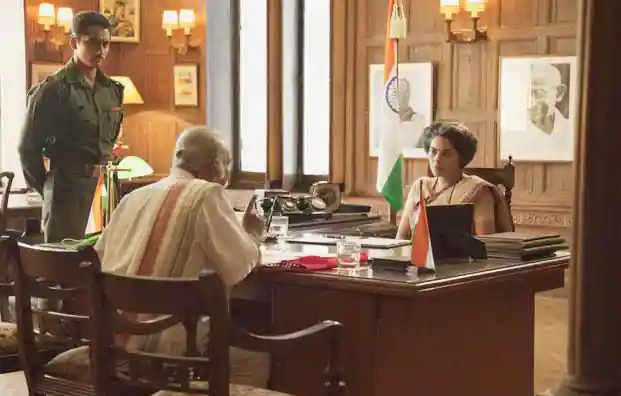
Independence, Partition, Emergency, the bloodbath and injustice in their wake, and the human vicissitudes in this span ‘pre-1947 to the 1970s’ totalling these grinders of history—Deepa Mehta’s Midnight’s Children, the screenplay and original book written by Salman Rushdie, is a staggering story to film.


In the late 1980s, after reading Rushdie’s book, auteur Satyajit Ray had famously said, “It would be unfilmable in the sense that it would have to be simplified so much it would not be itself." Rushdie, an admirer of Ray, had approached the film-maker to direct one of the numerous attempts to translate the book on to screen, as a six-part TV series. But Ray declined because, as he said in the same interview, “It has so much of the current, so much of contemporary politics." Mehta’s interpretation takes the illustrious Midnight’s Children legacy a bit forward, but does not make us see Saleem Sinai’s world in an unforgettable way, shattering our own imaginings of this busy and dense world. Her Midnight’s Children is worth a watch because, besides a few episodic sparkles, it urges us to revisit the book, and find the sweat and specks of Rushdie’s narrative.


Thank you…


Characters

13547

Words

2177

Sentences

170

Paragraphs

124


Saturday, July 10, 2021

Postcolonial studies and bollywood

 Thinking activity on Postcolonial studies and bollywood.


Hello viewers,

Today I'm going to write this blog on thinking activity about Postcolonial studies and bollywood which I have gotten by prof. Dilip Barad, I've to give my responses on this task and ideas on it , so let's begin, friends…


Rang De Basanti 


Rang De Basanti is a 2006 Indian Hindi-language drama film written, produced and directed by Rakeysh Omprakash Mehra, and co-written by Rensil D'Silva. The film follows a British film student traveling to India to document the story of five freedom fighters of the Indian revolutionary movement. She befriends and casts five young men in the film, which inspires them. to fight against the corruption of their own government. It features an ensemble cast consisting of Aamir Khan, Siddharth, Atul Kulkarni, Soha Ali Khan, Sharman Joshi, Kunal Kapoor and British actress Alice Patten. 


Postcolonial study of the movie "Rang De Basanti":


When we look at this film in a postcolonial way we find some interesting things.In the movie when British female protagonist She came on Indian airport at that time how Indian people gathered to meet her with excitement, so it shows the impact of white person on our mind. 


When an outsider sees the act of bribery it’s illegal for them but in India, it becomes normal for us. This scene is very well shown in the movie and how Sue reacts to it. The camera also focuses well.


Sue : इन लोगो ने जान दी थी आज़ादी के लिए तुम्हारे देश कि.  


This dialogue shows that these Indian characters do not know anything or they don’t focus on their own country. She came and she tried to awaken them for freedom and patriotism.


When Daljit and Pande fight at that time Sue tries to patch up them so if we look at  Postcolonial theory it says that why white people required to patch up?why are we Indian aren't able to do that? 


Sue : अपनी ट्रेडिशन का सम्मान करना ही चाहिए.


The other thing is when Sue speaks Hindi, DJ is shocked, because he thinks that white people can not speak and understand Hindi. This is a single story in our mind also. We think the white people can not speak our language. 


Lagaan 


Lagaan is a 2001 Indian epic sports drama film written and directed by Ashutosh Gowariker.When we look at from post colonial perspective at that time we find that why people gave much important only Cricket game not any other specially in India, and why we need white man for patch up still today. In this movie various identities are represented. How white man ruled over Indian people.


The story about the resilience shown by the Indians when they were under the British Rule. They are already taxed to the bone by the British and their cronies, but when Jack Russell announces that he will double the Lagaan from all villagers, they decide to oppose it. Leading the villagers is a handsome young man named Bhuvan, who challenges them to a game of cricket, a game that is to be played by veteran British cricket players, versus villagers, including Bhuvan himself, who have never played this game before, and do not even know a bat from a piece of wood. As the challenge is accepted, the interest grows and attracts Indians from all over the region, as well as the British from all over the country - as everyone gathers to see the 'fair play' that the British will display against their counterparts, who are aided by none other than the sister, Elizabeth, of Captain Rusell. 


Postcolonial study of the film "Lagaan"


The only thing represents post-colonialism in this movie is game of cricket. We accepts to play cricket because we want freedom from tax but now in free India why this game is more famous than any other game. It clearly shows that how still British people ruling our mind. This is the reason why cricket is more played and watched than our national game. 


Religion is also in the center of the movie. The temple of Lord Krishna is situated at height, which signifies their faith and place of religion. Before starting any work they pray to god for their victory. The king also staunchly believes in religion and because of that he denies eating meat to Captain Russell. Villagers have been suffering from drought for the last two years and they believe that if they pray to god, god will send rain. When Bhuvan accepts the challenge of cricket match no villager is ready to play but when first time Bhuvan hits the ball and ball hits the bell of temple then they find this as omen. In between the movie whenever they find themselves in a difficult situation they all gather and pray to god. By doing all these things the maker wants to show the power of religion and prayer.


Here in this film also Gauri who is living in a village who loves Bhuvan. Both are living in the same village. Bhuvan also loves Gauri. One other person  who also lives in the same village, Lakha , loves Gauri. Elizabeth, sister of Russell, also falls in love with Bhuvan. So we can find heartbroken Elizabeth and jealous Lakha.


In this movie various identities are represented. How white man ruled over Indian people. Through these movies we can conclude that now we are free, but still our minds are colonized. White men did not rule physically but they still ruled on us mentally. These are all movies made by Indian directors but they put black identity or colonial people in the margins. And they concentrate on this scene twice or thirst. Their cultures present well not any Asian or African country they used. 


Thank you …


Characters

5494

Words

968

Sentences

61

Paragraphs

29


Friday, July 9, 2021

ThAct: Shashi Tharoor and Dark era of inglorious Empire

 Thinking activity on Shashi Tharoor and dark era of inglorious Empire


Hello readers,


Here I'm gonna write this blog about some interesting points about Shashi Tharoor's speeches and ideas on An Era Of Darkness and I've to ponder upon the ideas and focus on the main aspects of the points given by him. And I got this task as my thinking activity by prof. Dilip Barad gave the responses to these speeches and ideas on An Era Of Darkness by Shashi Tharoor , so let's begin …


Introduction:


Shashi Tharoor


Shashi Tharoor is an Indian politician, writer and former international diplomat who has been serving as Member of Parliament, Lok Sabha from Thiruvananthapuram, Kerala, since 2009.  more


The very first point which I've to ponder upon is that


  1.  Write on key arguments in Shashi Tharoor's book - " An Era of Darkness". 


This is the video of an interview for the book "An Era Of Darkness" by Shashi Tharoor . In this video Tharoor talks about his book "An Era Of Darkness" and He says how Britishers attacked the Indian economy by increasing tax. People, who were unable to pay the tax, were whipped, tortured and harassed, treated very cruelly by the Britishers. India was rich in many industries also, such as steel, textile, hand loom etc. These colonizers made Indians weak enough that Indians lost the courage to strike back, and raise the voice. Britain transformed India from the richest country in the world to a poor country. Taxation, economy and many things were made weak. And by taking the advantage of this weakness, Britishers kept on looting and sucking the prosperity of India for 200 years.


Another video is about Shashi Tharoor's Stirring Speech at Oxford Union 


In this video Tharoor challenges the prime narrative and sets a postmodern outlook in his arguments. He says that ‘India was governed for the benefit of Britain’. In this video Shashi Tharoor ironically speaks against the master narrative and provides a detailed note with figures and sums regarding how the Indian Economy was severely affected by the colonialism imposed by Britain.  


Then one more video on it  , is about "Looking Back at the British Raj in India: The University of Edinburgh" 


In this video Tharoor talks about his PhD and most importantly about the academic rigor which is required for writing any thesis or paper. This was very related to the students of literature, especially those who are doing their graduation and post - graduation.  And he also talks about how Britishers and other colonizers looted India. All the colonizers came to this country and robbed all the useful things. India was capable enough to produce textile and steel, and in agriculture also India was producing many organic and nutritious crops. But the drawback for India was new machinery and technology was not easily accepted.  


Then the second point is that…


  1. Write critique on both the films with reference to Postcolonial insights. 


The Black Prince :


The Black Prince' is the tale of subjugation of the last Sikh king of Punjab, Maharaja Duleep Singh, the son of Maharaja Ranjit Singh directed by Kavi Raaz. The dilemma in the entire film is over identity. The identity crises, the belongingness, the religious conflicts play a very vital role in shaping the future course of the black prince who has been given the throne at the age of five upon the death of the father and has been abducted by the British government at the age of fifteen.  


"What you seek is all gone now, my black Prince" 


This is a chronicle surrounded over the identity and the fate of the last king of Punjab who loosened the throne and was never allowed to return. It is surrounded around the kingdom exploring relations with Queen Victoria. It is about the story lost in history and the colonial rule has never narrated it. The postcolonial way of looking at the subjects is the narration of the film. It unveils the whole new chapter of Indian History - from the prince's lost kingdom to his journey of being converted to Christianity. Hence, the narrative highlights the things and oppressions which the British have done to the subjects.  


Victoria and Abdul :


Victoria & Abdul is a 2017 British biographical comedy-drama film directed by Stephen Frears and written by Lee Hall. The film is based on the book of the same name by Shrabani Basu, about the real-life relationship between Queen Victoria of the United Kingdom and her Indian Muslim servant Abdul Karim. It stars Judi Dench, Ali Fazal, Michael Gambon, Eddie Izzard, Tim Pigott-Smith (in his final film role), and Adeel Akhtar. The film had its world premiere at the 74th Venice Film Festival, and was theatrically released on 15 September 2017 in the United Kingdom. It has grossed over $65 million worldwide.


Abdul Karim, a young prison clerk from British India, is instructed to travel to Britain for Queen Victoria's Golden Jubilee in 1887 to present her with a mohur, a gold coin that has been minted as a token of appreciation from British-ruled India. Abdul is from a Muslim, Urdu-speaking family in India. 


Thank you …


Characters

5092

Words

857

Sentences

54

Paragraphs

27


Wednesday, July 7, 2021

SR: Chimamanda Ngozi Adichie

 SR: Chimamanda Ngozi Adichie


Hello friends,


Here I'm going to write this blog about the video discussion of Chimamanda Ngozi's Ted talk in our classroom and and I've to give my responses of understanding postcolonialism from this video. So let's begin…


Introduction:


Chimamanda Ngozi Adichie:


Chimamanda Ngozi Adichie note  born 15 September is a Nigerian writer whose works range from novels to short stories to nonfiction.


Adichie uses her work to inspire women around the world in breaking gender constructions, stereotypes, and sexualities that have been made to subjugate women in society. Adichie has described feminism as part of the consensus knowledge on human rights.


The three talks video by Chimamanda Ngozi Adichie 


The first video is about "The Danger Of Single Story" 


The second video is "We should all be Faminist"


And the third video is about "Importance of truth in post-truth era"


Then I've to give responses of my understanding of these videos 


  1.  Did the first talk help you in understanding  of post colonialism ?


In this video Adichie argues that when there's only a single story about a group of people, it robs them of their dignity. The single story reduces people, rendering them incomplete, flat, one-dimensional. As a result, it becomes difficult to recognize equal humanity in the characters of a single story.


Adichie explains that if we only hear about a people, place or situation from one point of view, we risk accepting one experience as the whole truth. “The single story creates stereotypes, and the problem with stereotypes is not that they are untrue, but that they are incomplete,” Adichie says in the video. 

And this way the video helps for understanding postcolonialism.


  1. Are the arguments in the second talk convincing?


In this video Adichie's "We Should All Be Feminists," succinctly unearths the need to transform social beliefs and gender constructs that promote the disparity between men and women. 


Here are several more examples why we need feminism: Blatant sexism permeates economic, social and economic life. Women want to be called strong, not bitchy. ... Women do not need to be told how to live their life.  


Then she talks about Why is Feminism Important? 


Feminism allows equal opportunities for both sexes. Gender roles can be harmful to both men and women. ... It is also unfair to place pressure on boys to fulfil certain roles that are based on their gender. 

And this way it's arguments are convincing.


  1. What did you like about third talk?


This video is very interesting. In this the girl who called the name "chimichanga" instead of "Chimamanda" it's very humorous and interesting . And in this matter she pays attention to the uttering of the names with the mistake or whiteout mistake. So it's an interesting thing I've found in this video.


  1. Are these talks bringing any significant change in your way of looking at literature and life?


Yes, these videos are very helpful in my way of looking at the literature and the various aspects of my life . Very interesting things which Chimamanda discusses here and it's all very helpful and interesting to be follow-up in our lives…


Thank you…


  • Characters

   3206

  • words

   524

  • Sentences

   43

  • Paragraphs

   31

Types of research : Research Methodology

  Types of Research : Hello ,  I'm Bhumika Mahida , here I'm going to write a blog on the topic " Types of Research", whic...